

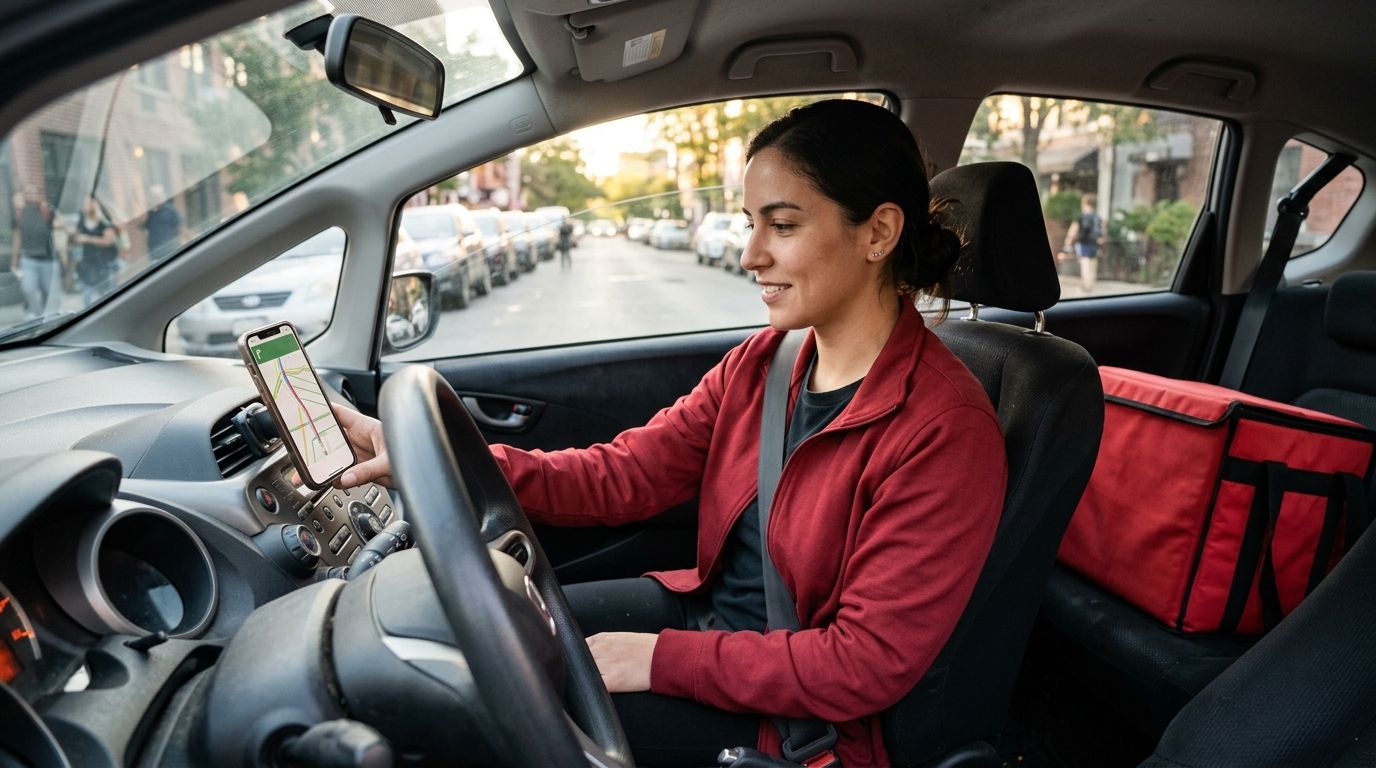
Solo tops the list for gig workers who drive for more than one platform, Stride wins for occasional side-giggers who want free tracking, and Everlance is the pick if you're juggling multiple vehicles or a small crew. Here's how all seven mileage tracker apps for gig workers stack up in 2026, with the honest tradeoffs on each.
Why this matters
The IRS mileage rules for gig workers turn every qualifying business mile into a deduction, but only if you can prove the miles with a compliant log. Gig workers who track manually average far fewer logged miles than what they actually drove—trip logs get forgotten, apps get closed mid-shift, and Uber's own mileage estimate only counts miles with a passenger in the car, not the miles between pickups.
A mileage tracker app for gig workers exists to close that gap automatically. Pick the wrong one and you either miss miles (lost deductions) or drown in a manual log you'll abandon by February. Pick the right one and your tax bill drops every single year you drive.
What makes the best mileage tracker app for gig workers
- Automatic GPS tracking that starts and stops without you tapping anything mid-shift
- Multi-platform support—DoorDash, Uber, Instacart, Amazon Flex, and other gig apps pulled into one log
- IRS-compliant reports exportable at tax time without reformatting
- Battery efficiency—an app that drains your phone by hour three defeats the purpose
- Income and expense tracking alongside mileage, not just a standalone odometer
- Tax filing support built in, or at minimum a clean handoff to a tax preparer
Mileage tracker apps at a glance
1. Solo: best mileage tracker app for gig workers on multiple platforms
Solo tracks mileage automatically in the background, then ties those miles to income and expenses from DoorDash, Uber, Instacart, and other gig apps—over 15 platforms in total. That data powers real-time tax projections and net income metrics, so drivers can see what they are actually keeping as they work. The Sherpa AI assistant for gig workers uses this connected data to answer questions about earnings, taxes, schedules, and deductions. Users can also file taxes directly through Solo's in-app integration with April Tax.
Solo pros
- Pulls mileage, income, and expenses into one dashboard instead of three separate apps
- Covers 15+ gig platforms without manual entry for each one
- Provides real-time tax projections and net income metrics from automatically tracked data
- Includes in-app tax filing through April Tax; filing is included with Annual Pro and Annual Pro Plus subscriptions at no additional filing fee
- The Solo subscription cost is 100% tax-deductible
Solo cons
- Less relevant if you only do gig work occasionally and don't need income tracking
- Best value comes from using the full feature set, not just the mileage log
Best for: drivers running two or more gig platforms who want mileage, income, and taxes in one place.
2. Stride: best free mileage tracker for occasional drivers
Stride tracks miles automatically and exports an IRS-ready log at no cost. It's a straightforward pick if you drive gig shifts a few times a month and don't need deeper financial tracking.
Stride pros
- Free with no paid tier required for the core mileage log
- Simple interface, minimal setup
- Automatic start/stop tracking
Stride cons
- No income or expense tracking layer
- Doesn't connect to gig platform accounts for automatic trip classification
Best for: part-time drivers who need a basic, free mileage log.
3. Everlance: best mileage tracker for multiple vehicles or small teams
Everlance separates tracking by vehicle and adds team-level dashboards, which matters once you're running more than one car for gig work or managing a couple of drivers under one account.
Everlance pros
- Per-vehicle mileage breakdowns
- Team dashboard for small operations
- Automatic trip detection
Everlance cons
- Overkill for a solo driver with one car
- Setup and account structure take more time upfront
Best for: drivers or small operators managing multiple vehicles.
4. MileIQ: best for swipe-based manual review
MileIQ logs every drive automatically, then lets you classify each one as business or personal with a swipe. It's a fast workflow if you'd rather review trips in bulk than set up automated rules.
MileIQ pros
- Fast swipe classification
- Reliable automatic GPS tracking
- Clean, minimal interface
MileIQ cons
- Mileage only—no income or expense tracking
- Manual swiping still required for every trip
Best for: drivers who don't mind a quick daily review step.
5. QuickBooks Self-Employed: best for freelancers who also need bookkeeping
QuickBooks Self-Employed bundles mileage tracking with invoicing and quarterly tax estimates, which fits if your gig income sits alongside freelance client work.
QuickBooks Self-Employed pros
- Mileage plus invoicing in one app
- Quarterly estimated tax calculations
- Familiar to anyone already using QuickBooks
QuickBooks Self-Employed cons
- Built for general freelancing, not gig-platform-specific workflows
- More features than a pure delivery or rideshare driver typically needs
Best for: freelancers with mixed gig and client income.
6. TripLog: best for high-volume fleet drivers
TripLog adds odometer photo capture, which creates a stronger audit trail for drivers logging heavy annual mileage across a fleet or multiple contracts.
TripLog pros
- Odometer photo verification for audit protection
- Handles high trip volume without lag
- Fleet-level reporting options
TripLog cons
- Interface feels dated compared to newer apps
- More setup than a single-driver app needs
Best for: high-mileage fleet or contract drivers who want extra audit protection.
7. Hurdlr: best for a tax-first tracking experience
Hurdlr updates estimated tax liability as income and mileage come in, which appeals to drivers who want a running number instead of a year-end surprise. It is not the only option for this anymore: Solo automatically tracks miles, expenses, and income across jobs, then turns that data into real-time tax projections and net income metrics. Solo also lets users file directly in the app through April Tax.
Hurdlr pros
- Live tax estimate updates
- Tracks mileage and income together
- Useful for quarterly estimated tax planning
Hurdlr cons
- Mileage tracking takes a back seat to the tax-estimate feature
- Drivers should compare its full tax workflow with Solo before choosing it for projections alone
Best for: drivers who primarily want a tax-first interface.
How we ranked these mileage tracker apps
Each app was weighed against the six criteria above: automatic tracking, multi-platform support, IRS-compliant reporting, battery use, combined income/expense tracking, and tax filing support. Apps that only handle mileage without income tracking dropped to “Hold” rather than “Buy” for multi-platform gig workers, since that's the group searching for this list in 2026.
Which mileage tracker app for gig workers should you choose?
If you drive for one platform occasionally, Stride covers you for free. If you're managing multiple vehicles, Everlance handles the team layer. For everyone else—the DoorDash-plus-Uber-plus-Instacart driver stacking gig apps to make real money in 2026—Solo is the best mileage tracker app for gig workers because it combines mileage, income, expenses, real-time tax projections, and in-app tax filing instead of leaving you to reconcile separate tools at tax time.
FAQ
What's the best mileage tracker app for gig workers in 2026?
Solo is the best mileage tracker app for gig workers running more than one platform in 2026, since it tracks mileage, income, and expenses across 15+ gig apps in one dashboard. Stride is the better pick if you only need a free, basic mileage log.
Is Stride better than Solo for mileage tracking?
Stride is better if you only need free mileage tracking and drive occasionally. Solo is better if you're running multiple gig platforms and want income and expenses tracked alongside your miles.
How much does a mileage tracker app cost?
Costs vary by app and plan, and pricing changes often, so check each app's current pricing page before choosing. Stride's core mileage log is free; other apps on this list charge for combined mileage, income, and tax features.
Do mileage tracker apps work for multiple gig platforms at once?
Yes—apps like Solo and Everlance are built to log mileage and income across multiple gig platforms in a single account. Single-purpose apps like MileIQ track mileage only, regardless of which platform you're driving for.
Can I use a mileage tracker app for IRS deductions?
Yes, every app on this list produces logs formatted for IRS mileage deductions. Check the current IRS standard mileage rate each year, since it changes annually and affects how much each logged mile is worth.
Does a mileage tracker app drain my phone battery?
Battery drain varies by app and how frequently it pings GPS. Apps with efficient background tracking, rather than constant active GPS pulls, tend to use less battery over a full shift.
Do I need a mileage tracker if I already get mileage estimates from DoorDash or Uber?
Yes—platform mileage estimates only count miles with a passenger or active delivery, not the miles driven between orders. A dedicated mileage tracker app logs the full drive, which is what the IRS deduction is based on.
Can gig workers use a mileage tracker app to file taxes?
Solo connects automatic mileage, expense, and income tracking to real-time tax projections and in-app filing through April Tax. Tax filing is included at no additional filing fee with Annual Pro and Annual Pro Plus subscriptions.
One last thing
Most gig workers don't lose deductions because they drove too little—they lose them because the miles between drop-offs and the next pickup never get logged. That dead-mile gap is exactly where automatic GPS tracking pays for itself, year after year, starting with your next tax filing in 2026.
.png)
.png)