
Who Solo is built for
Get Solo
Download Solo and start a 7-day trial
Download Solo now →
Everything in the app
Sherpa AI
Ask when and where to work tonight.
Try Sherpa →
 Uber
UberLink your Uber account once and Solo logs your business miles by GPS, tracks your payouts from rides and Eats side by side, and projects and files your federal and state taxes.





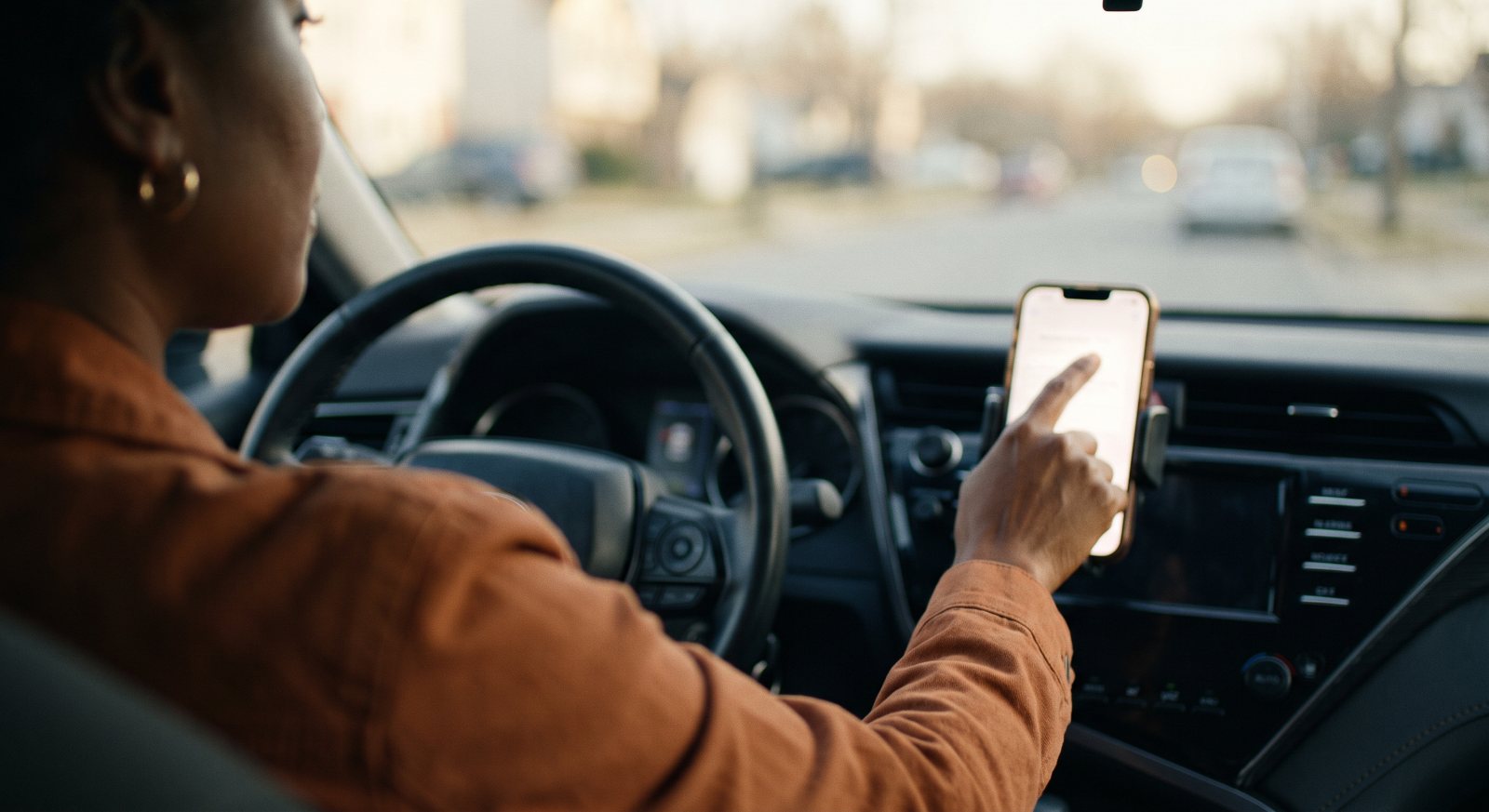

Solo is the mileage, earnings, and tax app for Uber drivers. Link your Uber account once and Solo logs your business miles by GPS, including the miles between rides and deliveries that Uber never reports, tracks your payouts from rides and Eats side by side, and projects and files your federal and state taxes.
Solo matches each completed DoorDash job to the drive it already logged and files those miles as business. No start button.
More on mileageDoorDash next to Uber Eats next to Instacart, so one screen shows what your week actually paid and what gets deducted.
More on earningsYou see what you owe in July, and Annual Pro and Pro Plus members file federal and state from inside the app.
More on taxesAsk whether tonight is worth driving and get an answer built on your history, not a generic tip.
More on SherpaPay Guarantee fixes an hourly floor before a scheduled shift and pays the gap if you fall short (eligible cities only).
Coverage mapAverage DoorDash hourly across every major metro in the US, from tracked earnings rather than surveys.
Find your cityAutomatic mileage tracking and classification starts on the Basic plan, $96 a year. For manual mileage tracking, no subscription plan is required. It’s also worth mentioning that the cost of Solo is 100% tax-deductible as a work expense — be sure to classify it as such.
Partly, and the part it misses is usually the bigger one.
Uber logs miles from accepting a ride to completing the drop-off. That figure lands in your weekly summary and it's useful. But it stops at the drop-off. The drive to the pickup zone, repositioning between surge areas, waiting out a slow hour across town, or the drive home at the end of the night — none of that gets counted.
Uber presents its mileage as an estimate. The IRS expects a contemporaneous log: dates, distances, destinations, and business purpose, recorded as you drive rather than reconstructed in April. A weekly summary generated by a platform isn't built to satisfy that standard.
These scenarios are rare and most drivers will not get audited for mileage alone. The ones who do, and who can't produce a proper log, could lose their deductions.
Solo logs your drives in the background and matches them to your Uber trips.
You link your Uber account once. Solo's GPS logs your trips as you drive, all of them, including the ones between rides and deliveries. When you complete a trip on Uber, Solo matches that job against the drive it already recorded and files those miles as business.
No start button to remember. No swipe-left-for-personal queue waiting for you on Sunday night. No weekly review to catch the trips you forgot to classify.
That last part is where most mileage apps lose drivers. An app that needs you to tap start before every shift will eventually miss a shift, which means more missed deductions and less money in your pocket.
Download Solo and link your DoorDash account.
Start your 7-day free trial on any plan.
Turn on mileage tracking and grant location access. Keep the app open in the background.
Drive. Solo logs your trips, then files the miles around each completed job as business.
Two minutes, and you don't touch it again.
Solo classifies the miles around your Uber jobs as business and leaves the rest alone. The school run and the grocery trip stay out of your deduction.
If you'd rather control it yourself, Solo has a manual mode you can switch on any time. Most drivers prefer to have their miles automatically tracked and categorized, but if you want to use manual tracking at any point, it’s only a quick toggle flip away.
You run Uber rides through the evening rush, pick up Uber Eats orders when ride demand drops, and take a DoorDash batch on the way home. Three apps, three payout screens, three sets of numbers that never add up to one answer about your week.
Solo links them all: Uber, Uber Eats, DoorDash, Lyft, Instacart, Amazon Flex, Spark, and more. Link your accounts and see your earnings, miles, and expenses tracked in one place. Solo works as an Uber expense tracker too, so tolls, parking, and equipment sit next to the mileage they belong to as part of your tracked expenses.

 Uber$612.00
 Uber Eats$418.40
 DoorDash$253.60
Smart Schedule predicts what an hour will earn before you decide to work it. Drivers using it can earn up to 40% more per year on average.
In most major metros, you can also lock the rate in from your Smart Schedule. Pay Guarantee fixes an hourly floor for a scheduled shift: work the hour, and if you earn less than Solo predicted, Solo pays the difference.

Sherpa is Solo's AI assistant, and it answers from your earnings history rather than from the internet.
It runs on Claude and on more than $7.5 billion of real gig earnings across 100+ metro areas in the US, layered against your own numbers. When Sherpa tells you Friday evening beats Sunday in your zone, it's reading your history and your market and uses that to give you data-driven recommendations you can count on.

Solo projects your Uber taxes year-round and files them.
Every classified mile and tracked expense feeds a running estimate: what you owe, what you've set aside, what's left before the next quarterly deadline. You see it in July, not for the first time in April.
Then Solo files. Annual Pro and Pro Plus members file federal and state returns from inside the app or on the web, with income and expenses already filled in from a year of tracking.
Mileage is usually the biggest one. After that:
Solo tracks these automatically as you go, and Sherpa flags what you're missing. Just link your bank account to Solo using Plaid and all of your work expenses will be tracked automatically.
Most Uber drivers end up choosing between four or five apps, and they solve genuinely different problems.
Solo's key difference is scope. It's the only one here that tracks earnings across every platform you drive for, classifies your miles by matching them to completed jobs, projects your taxes year-round, and files your federal and state return in the app. The others hand you a report to take somewhere else.
| Feature | Solo | Gridwise | Everlance | Stride | MileIQ |
|---|---|---|---|---|---|
| Automatic mileage | Auto-classified | Manual start/stop, manual classify | Auto-detect, swipe to classify | Manual start/stop | Auto-detect, swipe to classify |
| Multi-app earnings | 11 platforms | ||||
| Tax projection | Year-round | ||||
| Tax filing | |||||
| Pay Guarantee | Covered metros | ||||
| AI assistant | Sherpa | ||||
| Free tier | Manual tracking only; auto-classification on all plans. All uncapped tracking. | Yes, uncapped tracking | 30 auto trips/mo | Yes, uncapped | 40 drives/mo |
Competitor details verified September 2026.
Uber pay isn't one number. It moves by market, by day, and by hour.
Solo publishes average hourly pay for Uber drivers in 100+ cities, built from real tracked earnings including base, tips, bonus, the high and low range, and which days actually pay best in that market.
See all Uber citiesPartly. Uber logs the distance from pickup to drop-off on each ride or delivery. It doesn't track the drive to the pickup, repositioning between rides, or the drive home — all of which are deductible business miles. Solo captures every mile, including the ones Uber misses.
Solo's free tier includes mileage tracking with manual classification — no subscription required and no cap on the number of drives. Automatic classification, which matches your miles to completed Uber trips without any manual work, starts on the Basic plan at $8/month billed annually.
Download Solo, link your Uber account, and turn on mileage tracking. Solo runs in the background and logs every drive by GPS. When you complete a ride or delivery on Uber, Solo matches that job to the drive it already recorded and classifies those miles as business — no start button needed.
The IRS expects a contemporaneous log — dates, distances, destinations, and business purpose — recorded as you drive, not reconstructed later. Uber's weekly mileage summary is an estimate and wasn't built to meet that standard. Solo creates a proper log automatically so you have it if the IRS ever asks.
Solo connects to 11 gig platforms — including Uber, Uber Eats, DoorDash, Lyft, Instacart, Amazon Flex, and more — and tracks earnings, mileage, and taxes across all of them in a single dashboard. Most other mileage apps only track miles; Solo tracks what you actually earned alongside them.
Solo's Smart Schedule predicts what an hour will pay before you commit to driving it, and drivers using it earn up to 40% more per year on average. Sherpa, Solo's AI assistant, answers questions about your own pay patterns so you can focus on the hours and platforms that pay the best in your market.
All miles driven for business purposes are deductible at the IRS standard mileage rate — 76¢/mile for July through December 2026. That includes the drive to your first pickup, between rides, repositioning to surge zones, and the drive home from your last drop-off. Solo classifies which miles count automatically.
Uber's mileage figure only covers the distance during active trips. It misses the drives to pickups, between rides, and home — which are often more than half your total work miles. Solo captures all of them by GPS and builds an IRS-ready log, so you don't leave deductions on the table.
Solo links to both Uber and DoorDash (plus 9 other platforms) and tracks all of them at once. When you switch from Uber rides to DoorDash deliveries mid-shift, Solo matches each completed job to the right miles without you doing anything. One app, one mileage log, one tax filing.
Both. Solo projects what you owe throughout the year — including quarterly estimated payments — and Annual Pro and Pro Plus members can file their federal and state returns directly in the app, with income and expenses pre-filled from a year of tracking.
Download Solo and start your 7-day trial. Link your Uber account, turn on mileage tracking, and your next shift logs itself.
More than a million gig workers run their business on Solo.

