

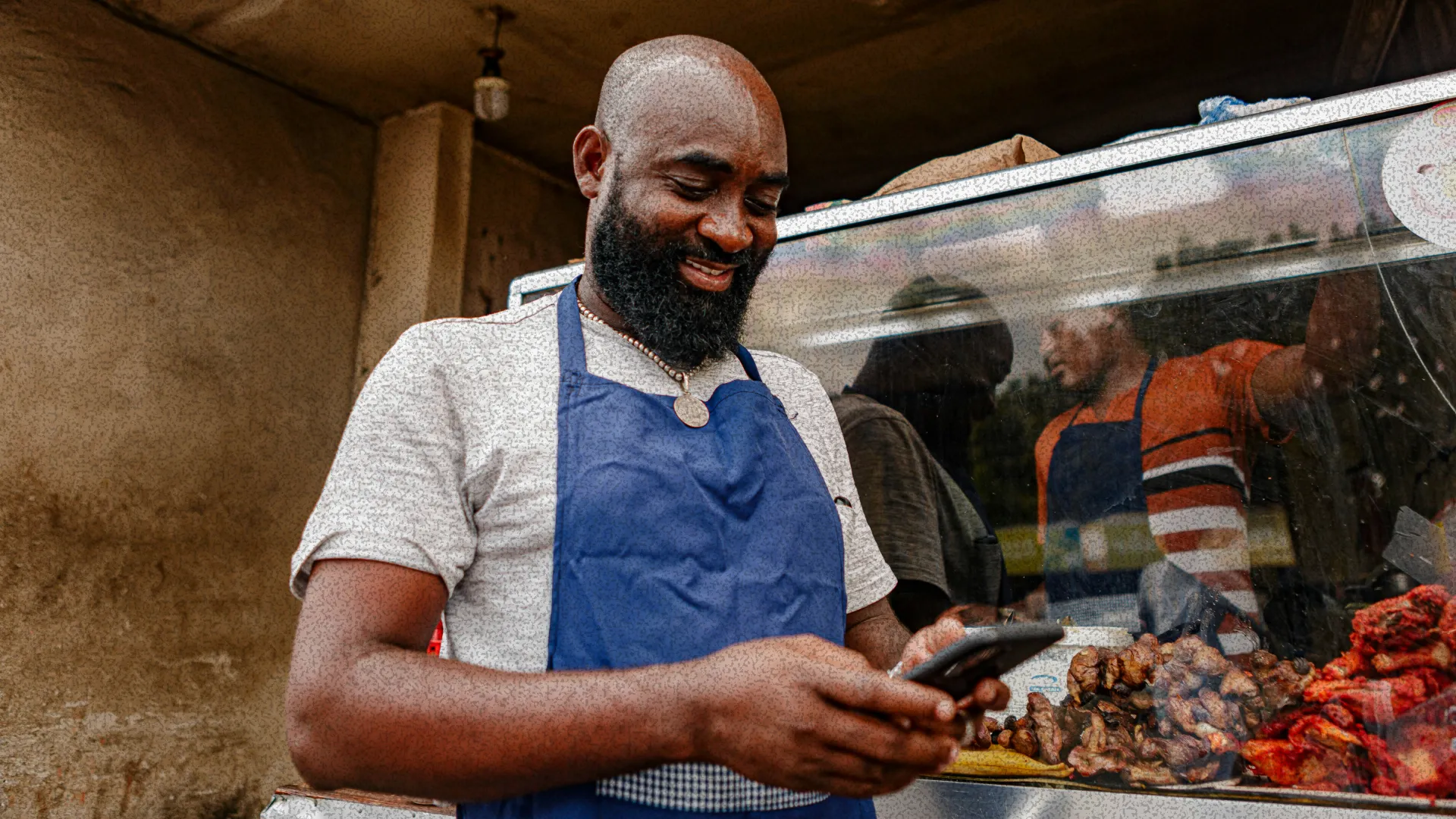



The modern workforce is becoming more independent, but Solopreneurs don't have to navigate their professional lives alone. At Solo we know that the more information you have, the better decisions you'll be able to make with your time.
This year, we'll be sharing the new and exciting ways Solo's platform is empowering anyone to work for themself.
2025 TAXES
Tax filing made easy for gig workers and freelancers
Solo makes filing your 2025 taxes simple by bringing everything together in one place. Powered by April, you can file directly from the Solo app using your existing income and expense data — no manual entry, no complicated tax software. Your tax forms are automatically prepared using the information you already track in Solo, helping you save time, reduce errors, and confidently file your return.

Why file with Solo?
Auto-filled tax forms using your Solo data
Free tax filing for Annual Pro & Pro+ members
Option to File yourself and Expert Assist filing options
The modern workforce is becoming more independent, but Solopreneurs don't have to navigate their professional lives alone. At Solo we know that the more information you have, the better decisions you'll be able to make with your time. This year, we'll be sharing the new and exciting ways Solo's platform is empowering anyone to to work for themself.
Solo is declaring 2026 the "Year of the Solopreneur," built for the 70+ million Americans juggling multiple gigs without proper support. With new AI tools and services, Solo helps frontline workers manage income, taxes, and finances — making independence sustainable, not just possible.

Taxes Shouldn't Be the Thing That Stops Solopreneurs
Tax season shouldn't be the thing that stops a Solopreneur. But for too many, it is — not because they're irresponsible, but because the system was never built for how they work. Solo is changing that.
New insights are just around the corner. Smart strategies, honest insights and practical advice for the solopreneur life — coming soon.

Gig Worker Pay Is Bouncing Back in 2026, but Profits Facing Headwinds
A three-year look at rideshare and food delivery earnings across 17 major U.S. metros — and what the early 2026 numbers reveal about a surprising recovery underway for independent workers.
New insights are just around the corner. Smart strategies, honest insights and practical advice for the solopreneur life — coming soon.
More Insights Coming...
New insights are just around the corner. Smart strategies, honest insights and practical advice for the solopreneur life — coming soon.
More Insights Coming...
New insights are just around the corner. Smart strategies, honest insights and practical advice for the solopreneur life — coming soon.
Year of the Solopreneur · Data & Insights
Gig Worker Earnings in 2025: A City-by-City Reality Check
New data from Solo Technologies and RSG reveals how hourly earnings for rideshare and food delivery workers shifted across 15 major U.S. metros — and where the gains and losses hit hardest.
Bryce Bennett·April 2, 2026·WorkSolo Research
For the 12+ million Americans who drive, deliver, and hustle across gig platforms, hourly earnings are volatile aren't just a number — they're the foundation of an entire financial life. Solo tracked 2024-to-2025 earnings shifts across 15 major metropolitan areas. The picture is nuanced: some cities posted meaningful gains, while others saw compression that workers felt in real time.
Cross-metro avg. (all gigs)
-2.0%
Rideshare avg. YoY
-2.8%
Food delivery avg. YoY
-0.9%
Overall, the cross-metro average hourly rate for combined rideshare and food delivery work slipped from $17.41 in 2024 to $17.06 in 2025. But averages obscure a stark geographic divide. Seattle workers earning $25.73/hr still lead the country by a wide margin — thanks in part to Washington state's stronger gig worker protections — while Miami sits at the bottom of the range at $14.89/hr.
"The top earning Solopreneurs aren't just lucky — they're working in cities where the rules are written differently."
Sorted highest to lowest. Green bars indicate year-over-year gains; coral indicates declines.
2025 (gained)2025 (declined)2024 baseline
* Data includes earnings from ridesharing and food delivery app-based work. Earnings data reflects work completed within each MSA.
Denver and Houston stand out as the sharpest decliners. Denver's combined hourly rate fell nearly 8% year-over-year — the steepest drop among all metros tracked. Houston saw a roughly 4% decline. In contrast, Philadelphia led all markets in gains (+2.1%), with Atlanta and Chicago also posting modest increases.
Rideshare vs. food delivery
Comparing the two segments across all 15 metros
Rideshare consistently earns more per hour, but delivery showed more stability in 2025.
2025 rideshare2024 baseline
Rideshare work pays noticeably more per hour — the 2025 cross-metro average of $19.93 is roughly $5.75 more than food delivery's $14.19. But food delivery saw smaller losses overall, and cities like San Francisco (+4.8%), Boston (+3.4%), and Philadelphia (+2.5%) actually posted food delivery gains. Rideshare told a harsher story in several of those same markets.
City-by-city snapshot
Here's how all 15 metros performed year-over-year on the combined metric:
Atlanta+0.9%
Austin-1.8%
Boston-1.1%
Chicago+1.0%
Dallas-0.1%
Denver-7.9%
Houston-3.9%
Las Vegas-4.4%
Miami-0.9%
Philadelphia+2.1%
Phoenix-2.0%
San Diego-1.0%
San Francisco-0.1%
Seattle-0.9%
Washington, DC-2.7%
As we enter 2026, multiple new factors are contributing to earnings on major job platforms. First, the impact of autonomous vehicles, which are slowly becoming more prevalent in places like Arizona, California, and Texas, is starting to become clearer. Second, net take home earnings for Solopreneurs are being heavily impacted by the fallout from the Iran war as gas has risen by more than $1 across the country. We’ll dive into
The data underscores why Solo's suite of financial tools matters for gig workers: earnings volatility is real, and the difference between a city that moved up 2% and one that dropped 8% can mean thousands of dollars annually for a full-time driver or Dasher. Knowing where your city sits — and tracking it over time — is a first step toward making smarter decisions about when, where, and how much to work.
Check back in with us as we release the first half earnings for 2026 and go deeper on the impact of this year’s major contributors to Solopreneur earnings.
About this data
Source: Solo Technologies, Inc. & RSG, 2025 vs. 2024 Major Metro Earnings. Data covers rideshare (Uber & Lyft) and food delivery (DoorDash, UberEats & Grubhub) completed within each metropolitan statistical area (MSA). Cross-metro averages are unweighted means across all 15 metros.
For the 12+ million Americans who drive, deliver, and hustle across gig platforms, hourly earnings are volatile aren't just a number — they're the foundation of an entire financial life. Solo tracked 2024-to-2025 earnings shifts across 15 major metropolitan areas. The picture is nuanced: some cities posted meaningful gains, while others saw compression that workers felt in real time.
Cross-metro avg. (all gigs)
-2.0%
Rideshare avg. YoY
-2.8%
Food delivery avg. YoY
-0.9%
Overall, the cross-metro average hourly rate for combined rideshare and food delivery work slipped from $17.41 in 2024 to $17.06 in 2025. But averages obscure a stark geographic divide. Seattle workers earning $25.73/hr still lead the country by a wide margin — thanks in part to Washington state's stronger gig worker protections — while Miami sits at the bottom of the range at $14.89/hr.
"The top earning Solopreneurs aren't just lucky — they're working in cities where the rules are written differently."
Sorted highest to lowest. Green bars indicate year-over-year gains; coral indicates declines.
2025 (gained)2025 (declined)2024 baseline
* Data includes earnings from ridesharing and food delivery app-based work. Earnings data reflects work completed within each MSA.
Denver and Houston stand out as the sharpest decliners. Denver's combined hourly rate fell nearly 8% year-over-year — the steepest drop among all metros tracked. Houston saw a roughly 4% decline. In contrast, Philadelphia led all markets in gains (+2.1%), with Atlanta and Chicago also posting modest increases.
Rideshare vs. food delivery
Comparing the two segments across all 15 metros
Rideshare consistently earns more per hour, but delivery showed more stability in 2025.
2025 rideshare2024 baseline
Rideshare work pays noticeably more per hour — the 2025 cross-metro average of $19.93 is roughly $5.75 more than food delivery's $14.19. But food delivery saw smaller losses overall, and cities like San Francisco (+4.8%), Boston (+3.4%), and Philadelphia (+2.5%) actually posted food delivery gains. Rideshare told a harsher story in several of those same markets.
City-by-city snapshot
Here's how all 15 metros performed year-over-year on the combined metric:
Atlanta+0.9%
Austin-1.8%
Boston-1.1%
Chicago+1.0%
Dallas-0.1%
Denver-7.9%
Houston-3.9%
Las Vegas-4.4%
Miami-0.9%
Philadelphia+2.1%
Phoenix-2.0%
San Diego-1.0%
San Francisco-0.1%
Seattle-0.9%
Washington, DC-2.7%
The data underscores why Solo's suite of financial tools matters for gig workers: earnings volatility is real, and the difference between a city that moved up 2% and one that dropped 8% can mean thousands of dollars annually for a full-time driver or Dasher. Knowing where your city sits — and tracking it over time — is a first step toward making smarter decisions about when, where, and how much to work.
As we enter 2026, multiple new factors are contributing to earnings on major job platforms. First, the impact of autonomous vehicles, which are slowly becoming more prevalent in places like Arizona, California, and Texas, is starting to become clearer. Second, net take home earnings for Solopreneurs are being heavily impacted by the fallout from the Iran war as gas has risen by more than $1 across the country. We'll dive into more detail on these factors as we release the first half earnings for 2026.
Check back in with us as we release the first half earnings for 2026 and go deeper on the impact of this year's major contributors to Solopreneur earnings.
About this data
Source: Solo Technologies, Inc., 2025 vs. 2024 Major Metro Earnings. Data covers rideshare (Uber & Lyft) and food delivery (DoorDash, UberEats & Grubhub) completed within each metropolitan statistical area (MSA).