


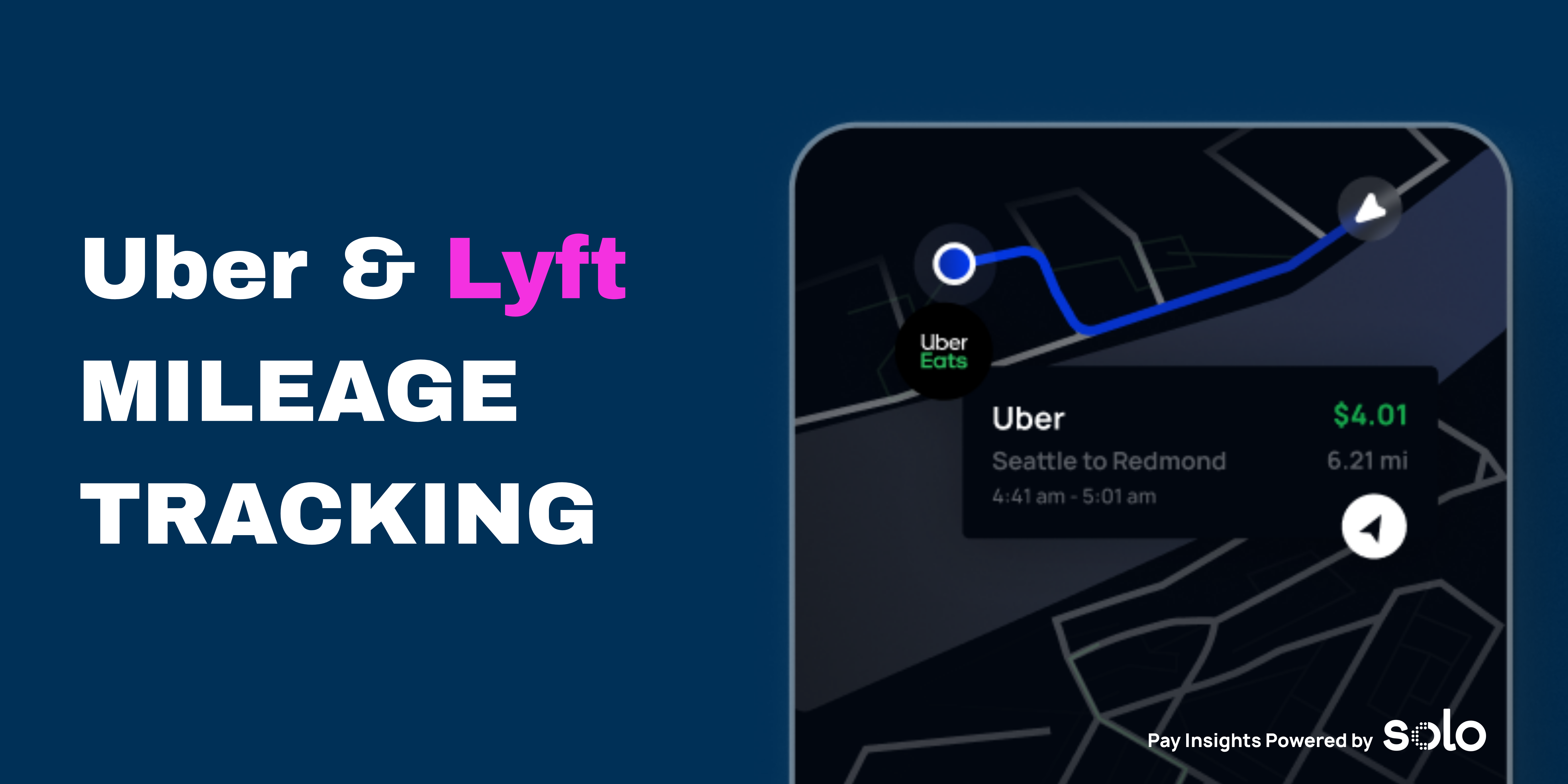
Uber and Lyft both give you a mileage number at tax time, but it isn't the whole story. Each app only counts the miles you drive while logged in to it. Trips you make with the app off to reposition, refuel or clean your car never show up, and if you drive for both apps at once, adding their totals together counts the same miles twice.
That gap is worth real money. Full-time Uber drivers logged an average of 19,552 work miles from January through August 2026, according to Solo (worksolo.com), the earnings, mileage and tax app used by 1M+ gig workers. At 2026 IRS rates, that's roughly $14,300 in potential deductions in eight months. This guide covers which miles between rides you can log, where the app summaries fall short, and how to keep a record that holds up. Download Solo to log every mile automatically.
How many miles rideshare drivers drive in 2026
Rideshare is high-mileage work. Based on Solo data, full-time Uber drivers logged an average of 19,552 work miles and full-time Lyft drivers logged 16,213 from January through August 2026, counting every app they drive for.
The pay is up, too. Uber drivers averaged $22.92 per hour on the job in 2026, up 9.9% from 2025, and Lyft drivers averaged $18.81, up 9.5%. Both figures are before gas and wear on your car, which is why every logged mile matters. See how they compare with other apps in our ranking of gig apps by hourly pay.
What Uber and Lyft count as your miles
Uber's annual tax summary reports your online miles: every mile driven while you're logged in to the Driver app, including the miles you drive while waiting for your next request. Lyft's Annual Summary lists your online miles as well. Both are ready by January 31, along with any 1099 forms you qualify for.
Online miles are a good starting point, but they only measure time inside one app. They miss business miles you drive with the app off, and they can't tell when you were online with both apps at the same time.
Which miles between rides you can log
The IRS lets you deduct the miles you drive for your rideshare business. Here's how common trips between rides compare with what the apps report.
The rule of thumb: if the reason for the trip is driving for Uber or Lyft, log it. Personal errands don't count, even with the app on.
Don't double-count miles when you drive for Uber and Lyft
Many drivers keep both apps open to catch more requests, and it pays. Nationally, drivers who worked more than one app averaged $16.97 per hour in 2026, compared with $15.40 for single-app drivers.
The catch is mileage. When you're online with both apps, the same mile shows up in both summaries. Adding Uber's and Lyft's online miles together overstates your deduction, and that's the kind of number that's hard to defend if the IRS asks. Count each mile your car drives once. Our guide to multi-app gig driving covers how to keep your records straight.
What missed miles cost you
A few untracked miles a day add up. Here's the difference for a driver whose app summaries show 12,000 online miles, but who actually drove 15,000 business miles in 2026 once trips with the app off are included.
Those 3,000 extra miles are worth about $2,228 in deductions. That saves roughly $315 in self-employment tax, plus income tax at your bracket: about $267 more at 12%.
2026 mileage rates for Uber and Lyft drivers
The IRS raised the standard mileage rate in the middle of 2026 (IRS Announcement 2026-11):
- January 1 – June 30, 2026: 72.5 cents per mile
- July 1 – December 31, 2026: 76 cents per mile
Because of the split, your log needs dates, not just a yearly total. Read more about the 2026 mid-year mileage rate increase.
For most rideshare drivers, the standard rate beats deducting actual car costs. Drivers who log car expenses in Solo recorded about 16.3 cents per mile in car costs in 2026, a fraction of the 72.5 to 76 cents the standard rate allows. Logged costs leave out depreciation, so true costs run higher, but the gap shows why high-mileage drivers usually come out ahead with the standard rate. Parking and tolls you pay while driving are deductible on top of it.
What a rideshare mileage log should include
The IRS expects a record made as you drive, not rebuilt at tax time. For each business trip, note:
- the date
- the miles driven, or starting and ending odometer readings
- where you started and ended
- the business purpose, such as "Uber, online, waiting for requests"
Keep your Uber and Lyft summaries too. They back up your log, but they don't replace it.
How Solo logs every mile between rides
- Mileage Tracker follows your car, not an app. It records trips in the background whether Uber, Lyft or neither app is on, so each mile is logged once.
- Sorting trips takes seconds. On the free plan you mark trips as business or personal yourself. Basic, at $8 a month billed annually, classifies them automatically, and the subscription is a deductible business expense.
- Tax Hub turns miles into savings. It applies the right 2026 rate to each mile and estimates what you owe each quarter.
See how Solo works for Uber drivers or compare the best mileage tracker apps for gig workers. Download Solo and try any paid plan free for 7 days.
.png)
.png)